Target the follow-up.
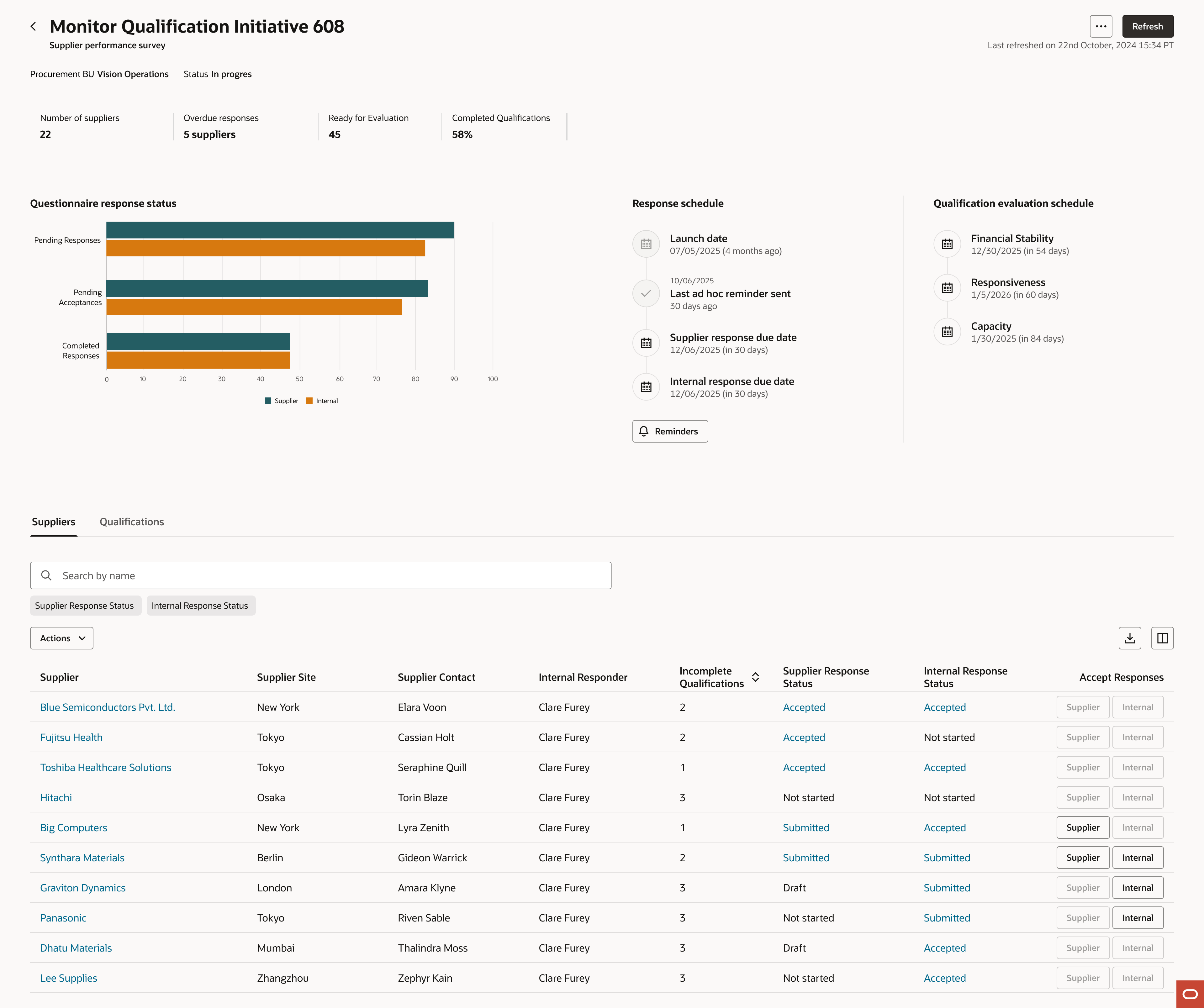
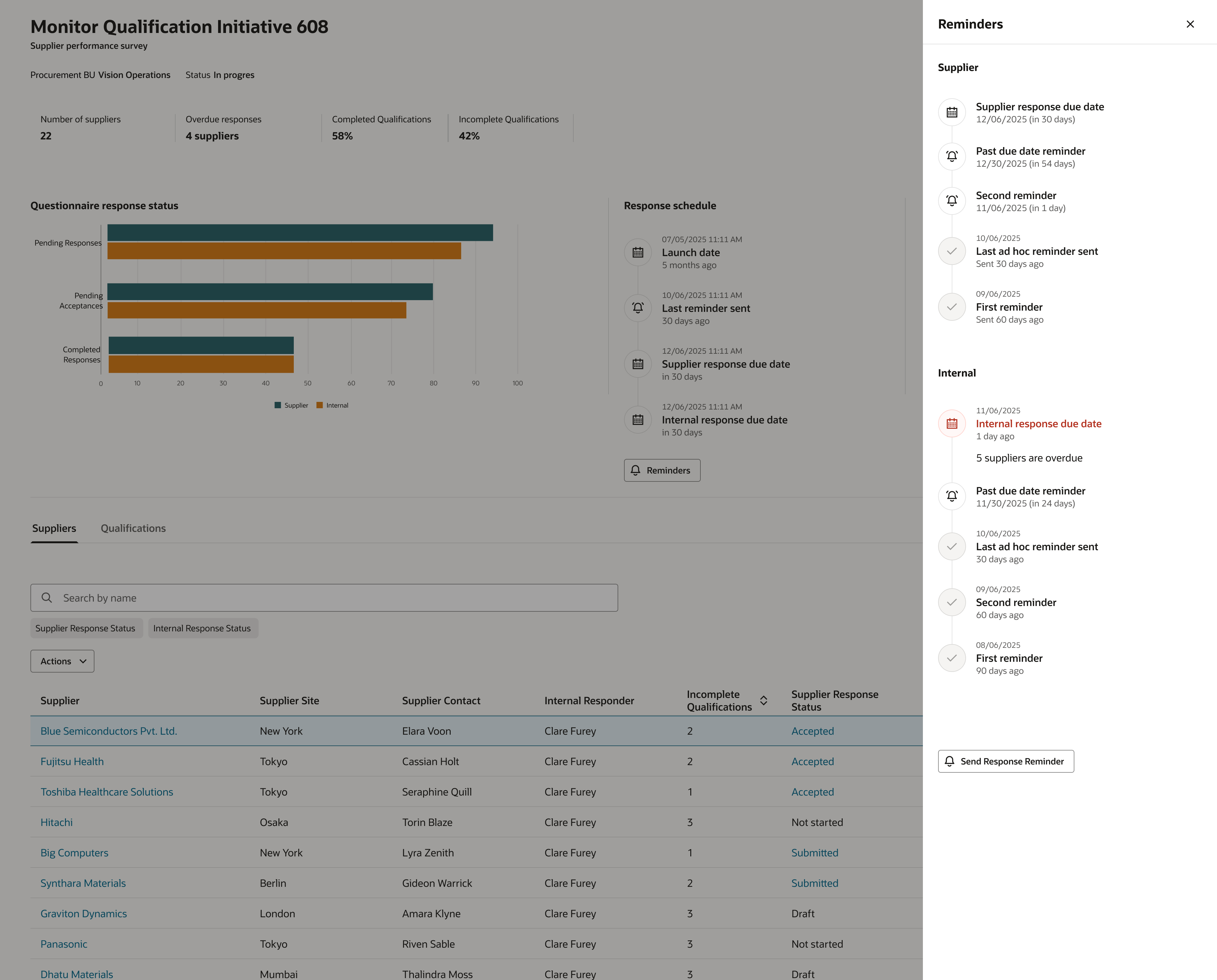
Supplier-specific reminders replaced the need to remind every supplier at once, allowing managers to direct follow-up where it was needed.

Product overview
Helping category managers create qualification initiatives, collect supplier information and keep work moving—while modernizing a complex enterprise product for Oracle Redwood.
Principal Product Designer
Sole designer leading SQM · Almost two years
Sujith and Anshu · Product management
Varun and team · Engineering
Design and product leadership
01 / The challenge
Category managers evaluate whether suppliers meet the requirements to do business. Reusable questions and qualification areas underpin questionnaires, which suppliers complete as part of qualification and assessment initiatives.
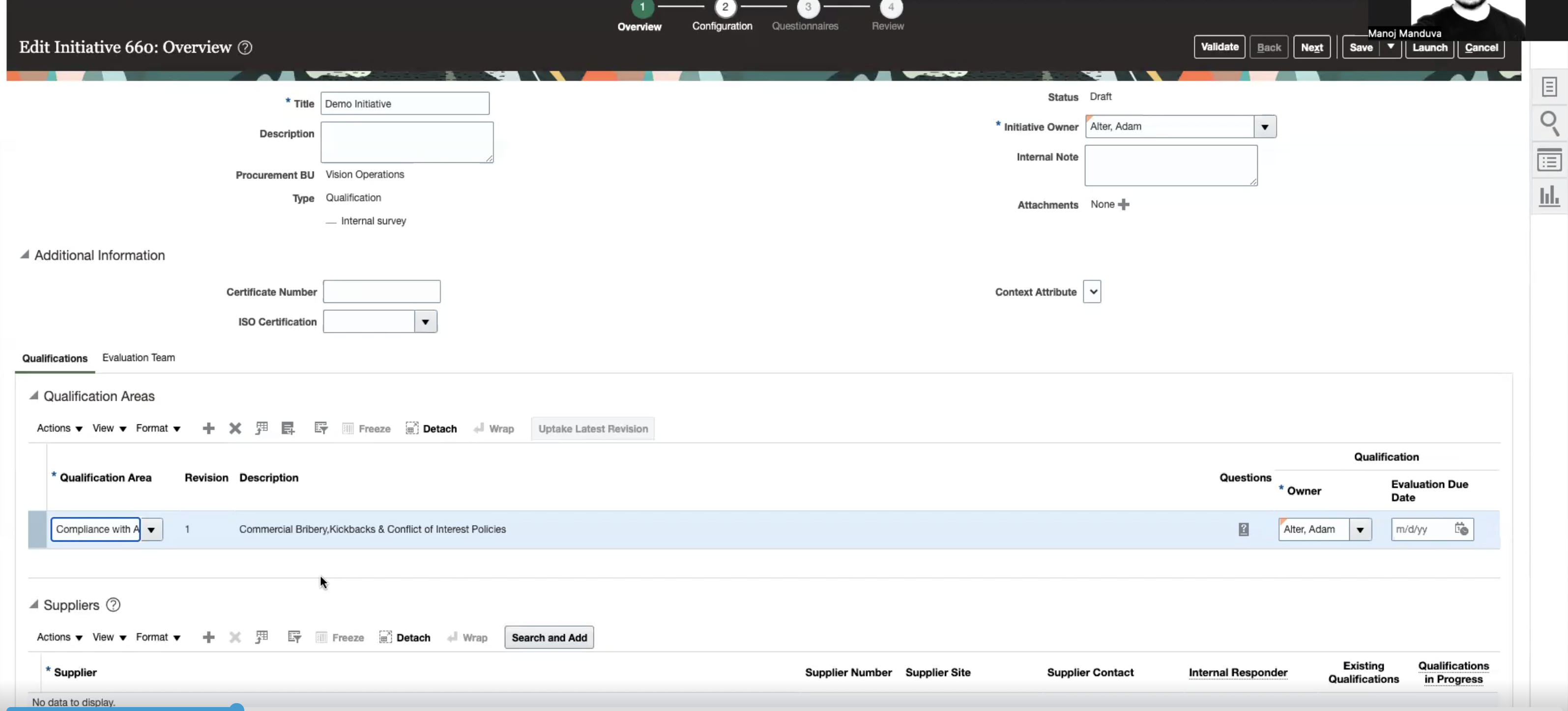
The existing ADF interface spread work across tables and forms. Alongside the move to Redwood and Elasticsearch, I focused on reducing setup fatigue, making response status clearer and improving follow-up. Delayed responses can hold up qualification and reduce the pool of available qualified suppliers.
02 / Understanding the domain
I combined fleet usage analysis—internally called “Shape of Data”—with Customer Connect feedback, product documentation and regular conversations with product managers. I also completed SCM certifications and explored the existing workflows in a demo environment.
Usage context informing the design—not an outcome attributed to the redesign.
That volume made repeated authoring and setup work an important area to address.
03 / Simplifying setup
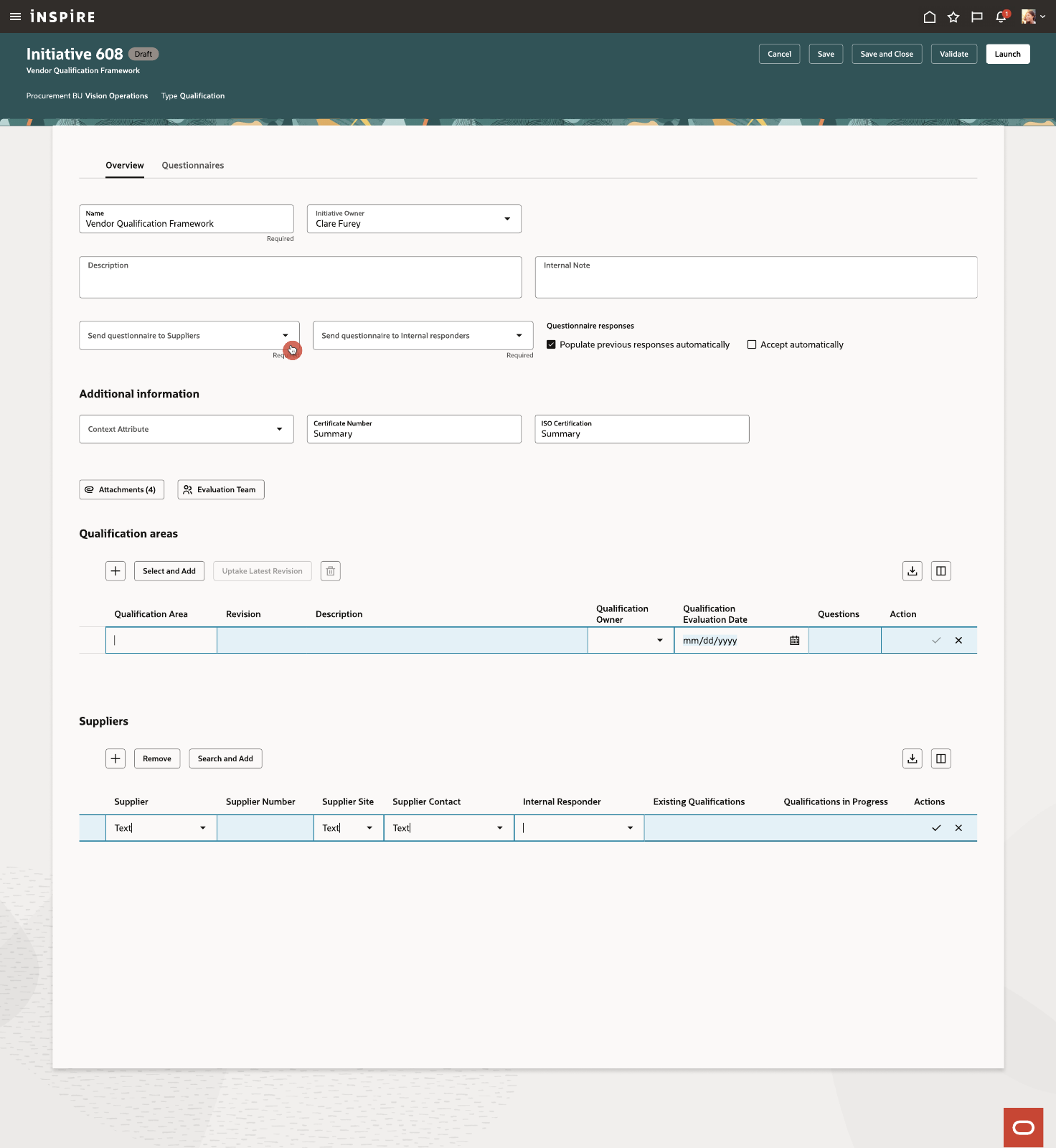
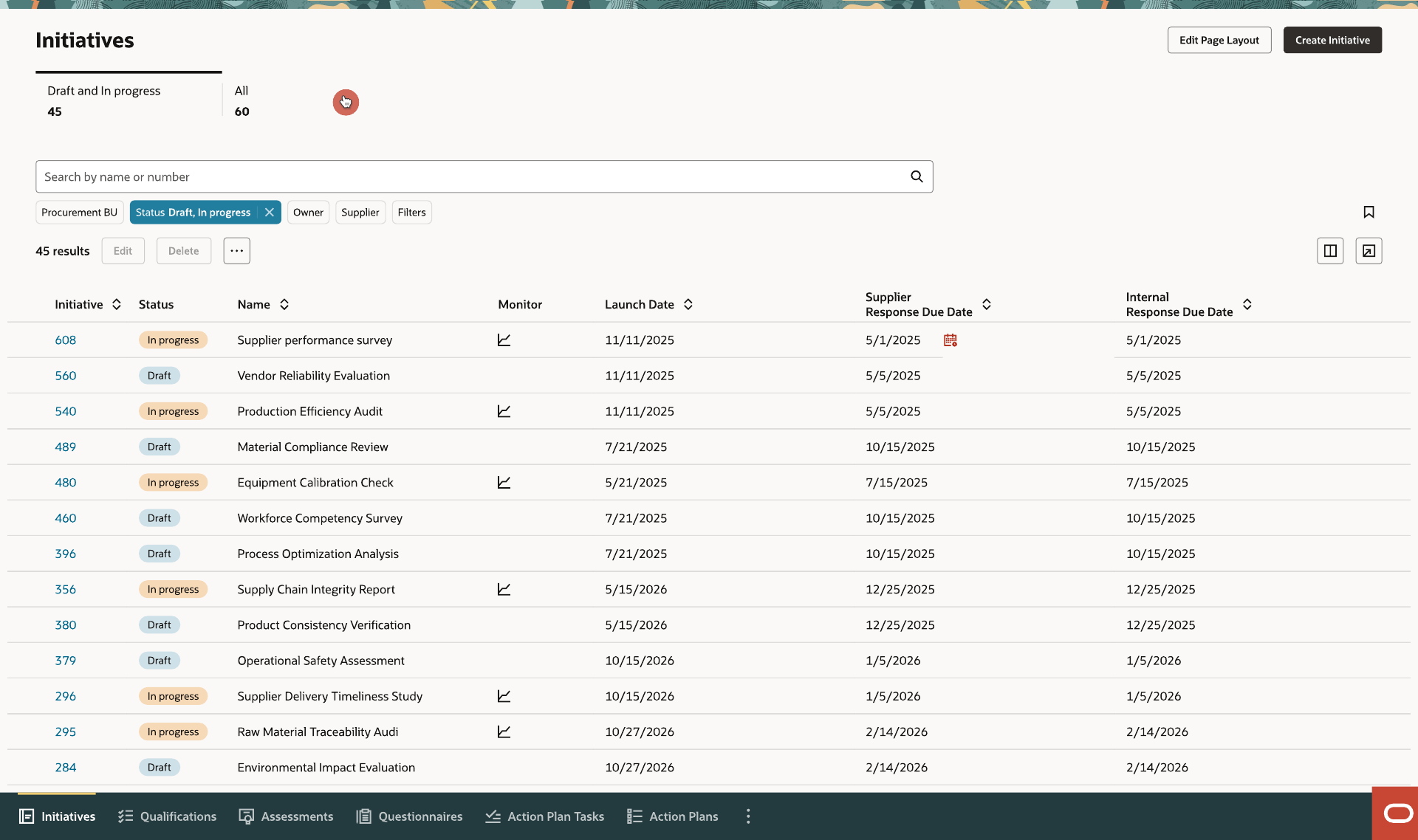
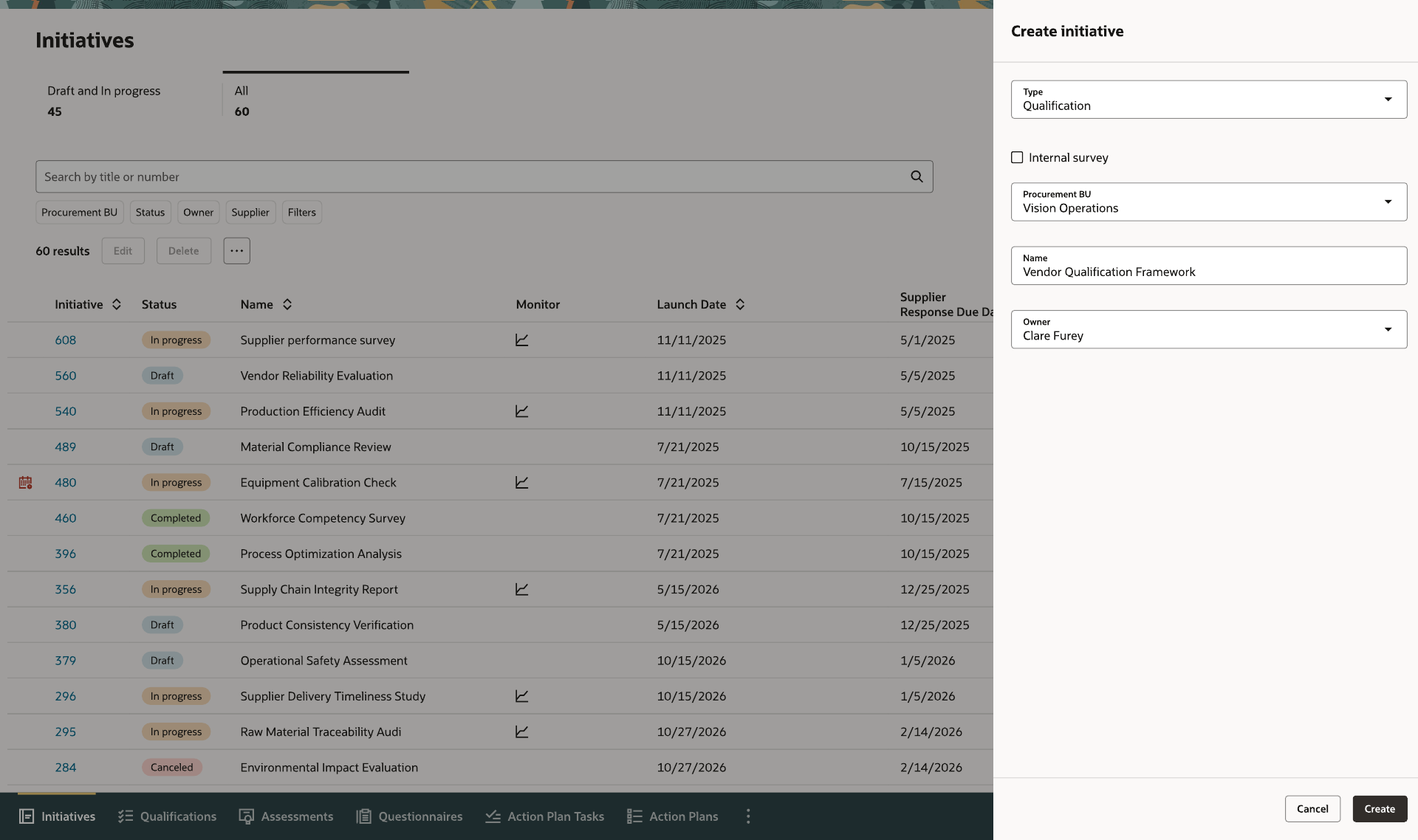
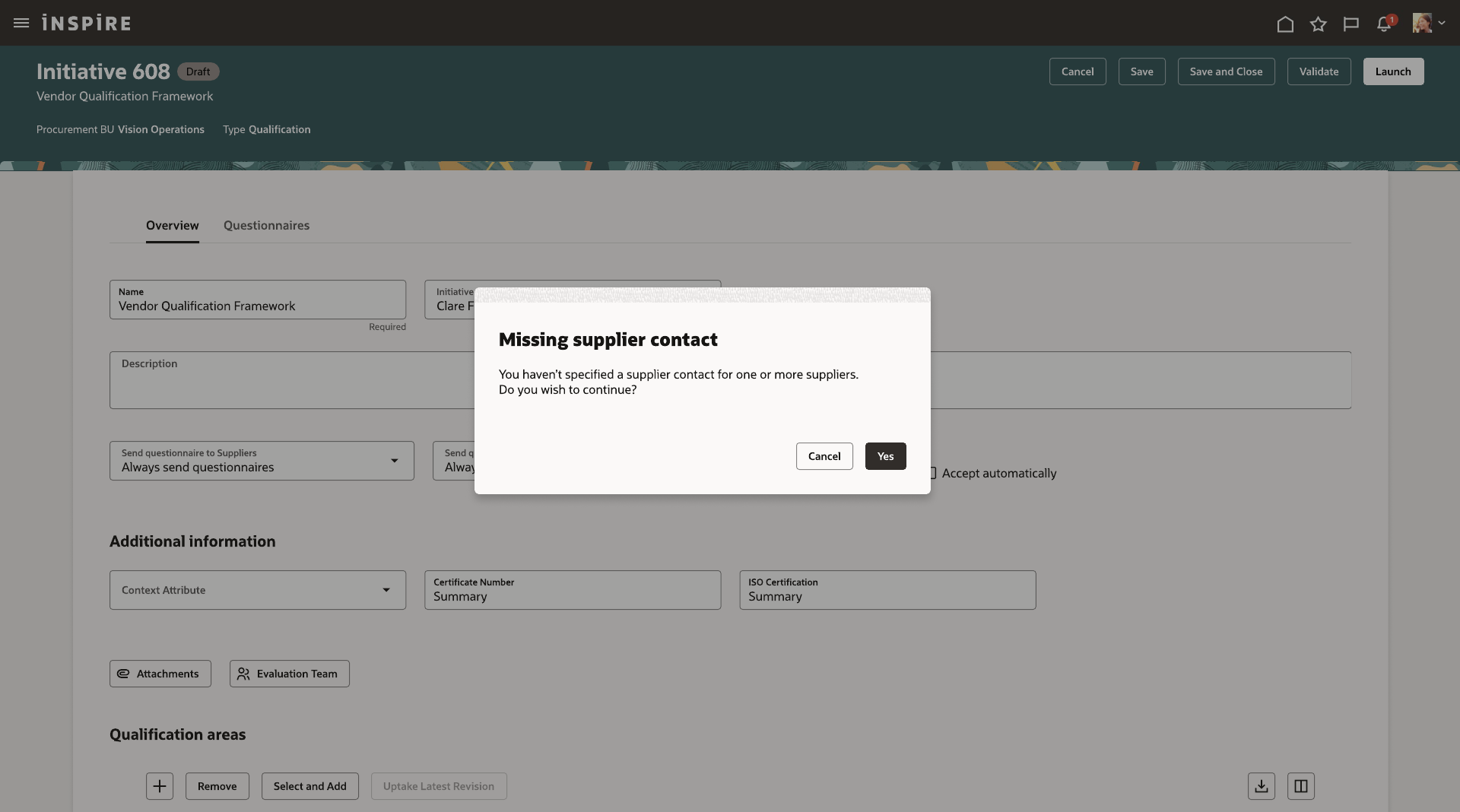
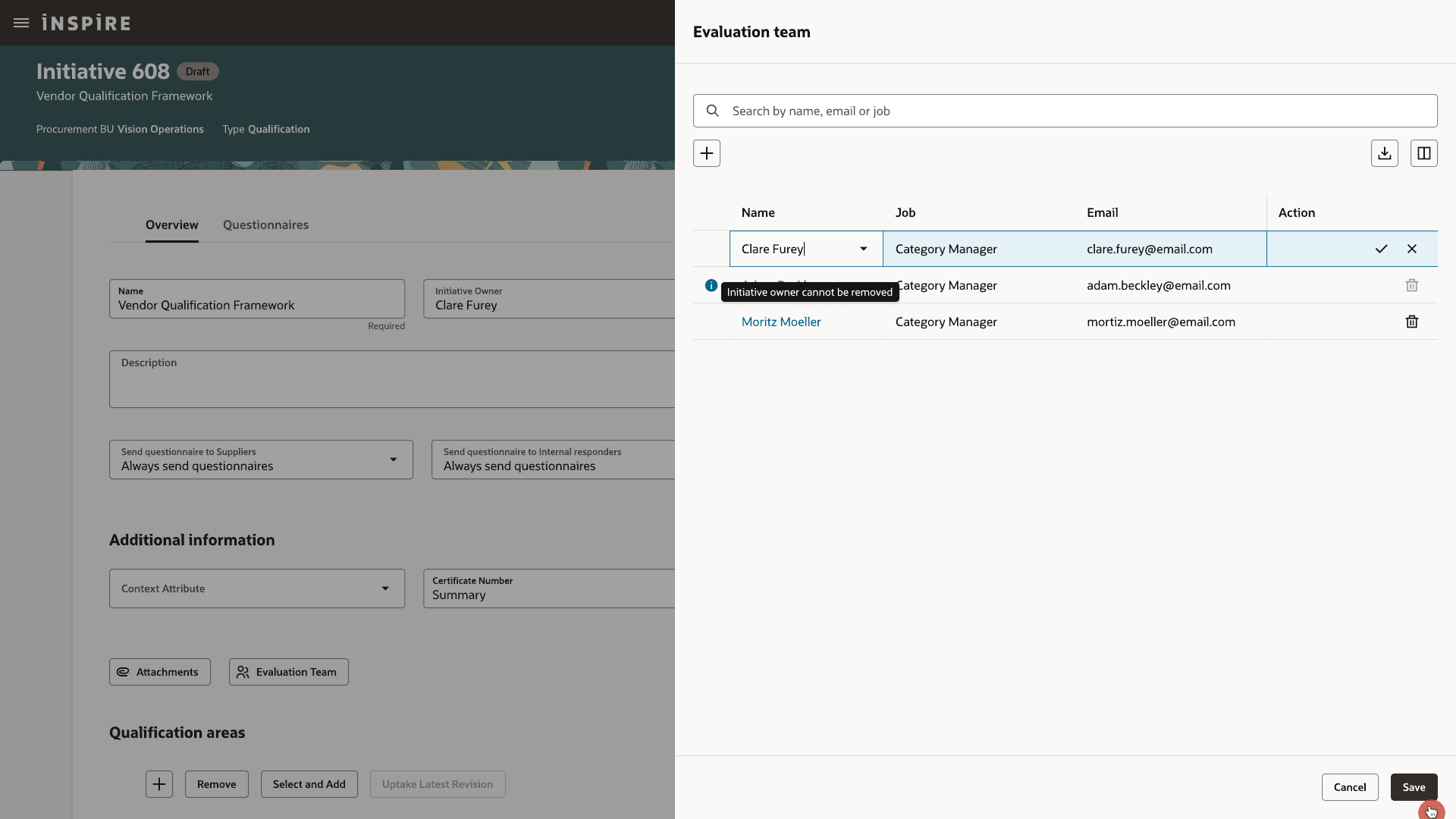
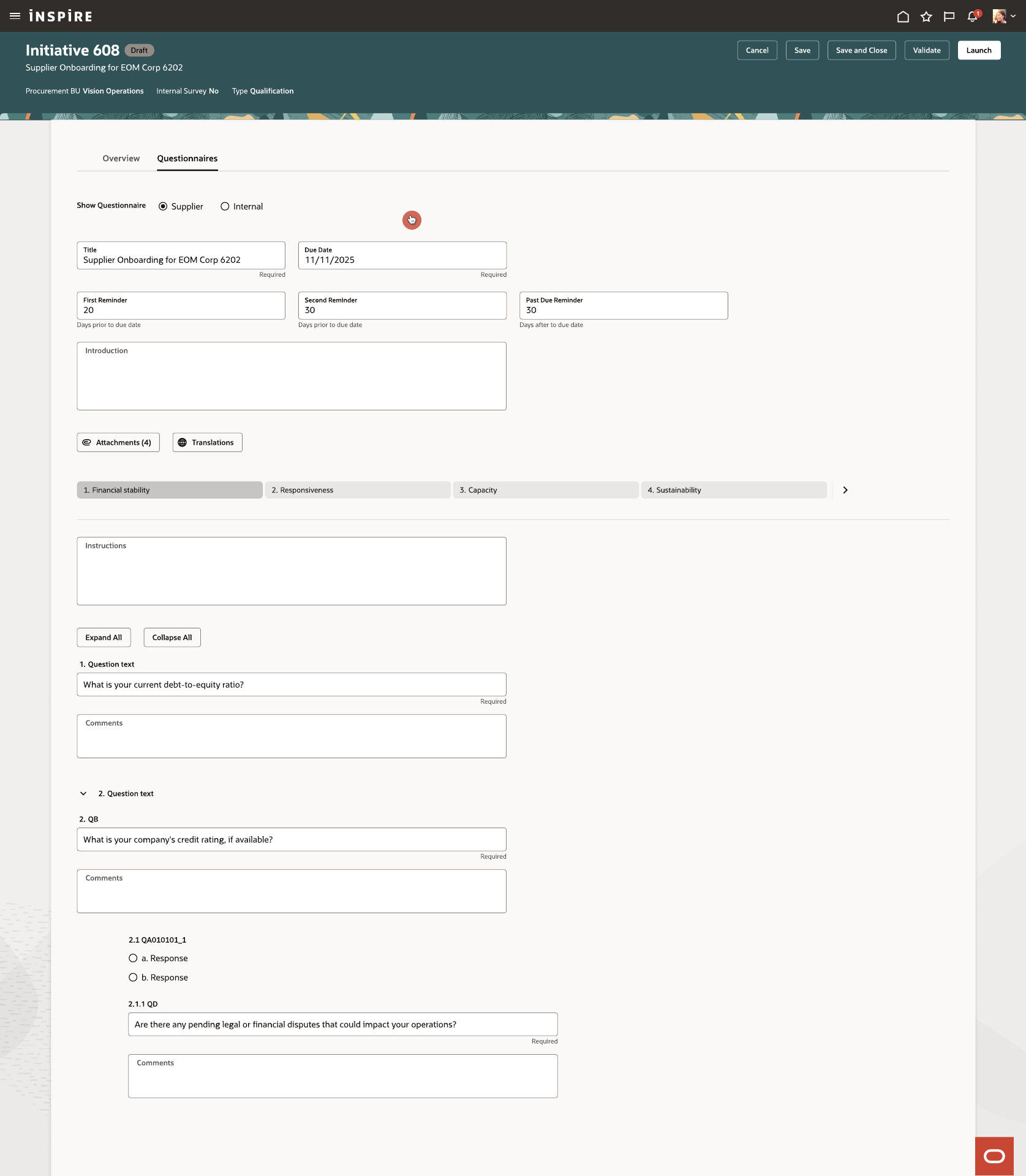
I simplified assessment and qualification creation from workflows involving multiple tables and forms into fewer pages and more focused steps. The same approach guided setup objects and rule sets: preserve the necessary controls while reducing the effort of navigating them.
Questions and qualification areas
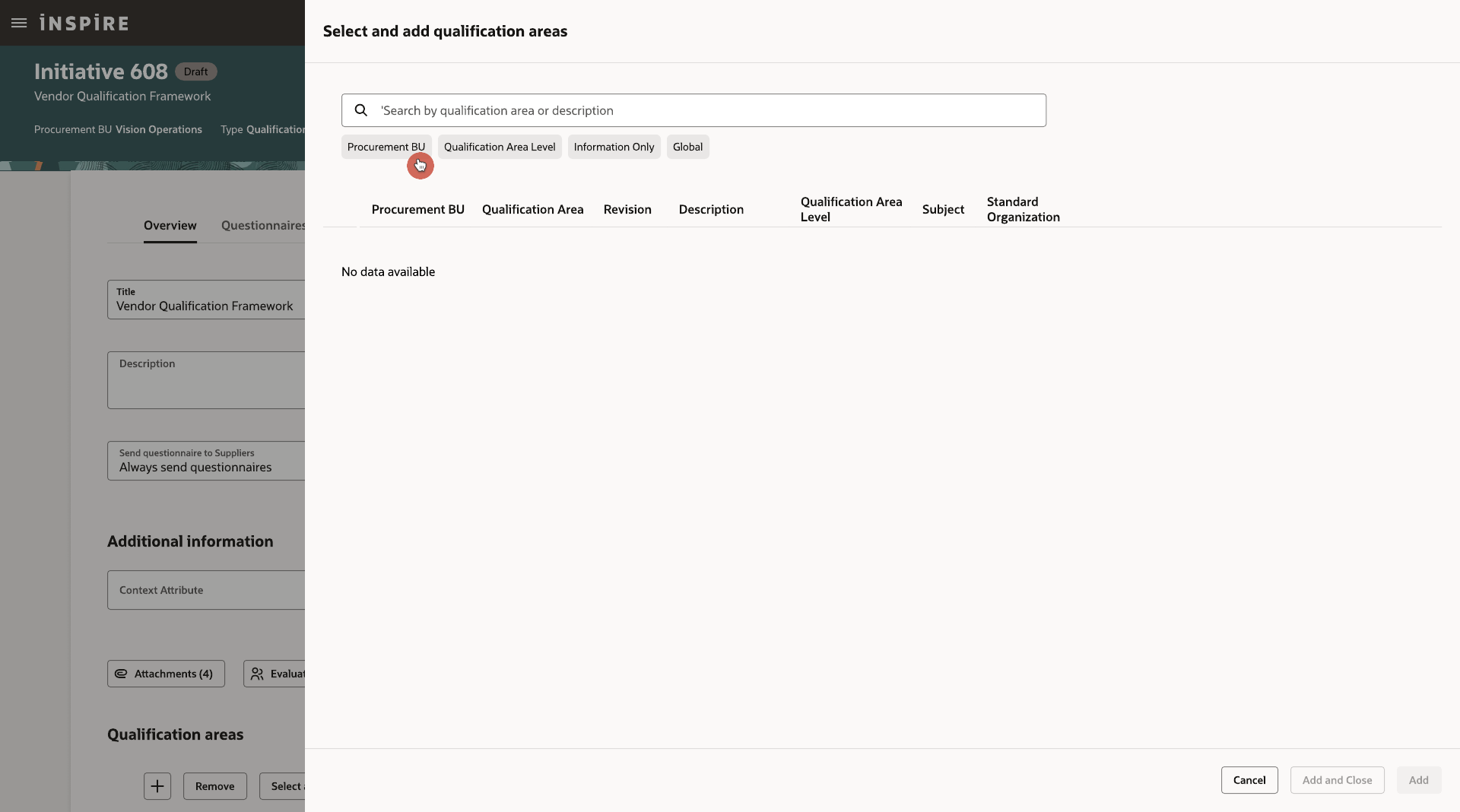
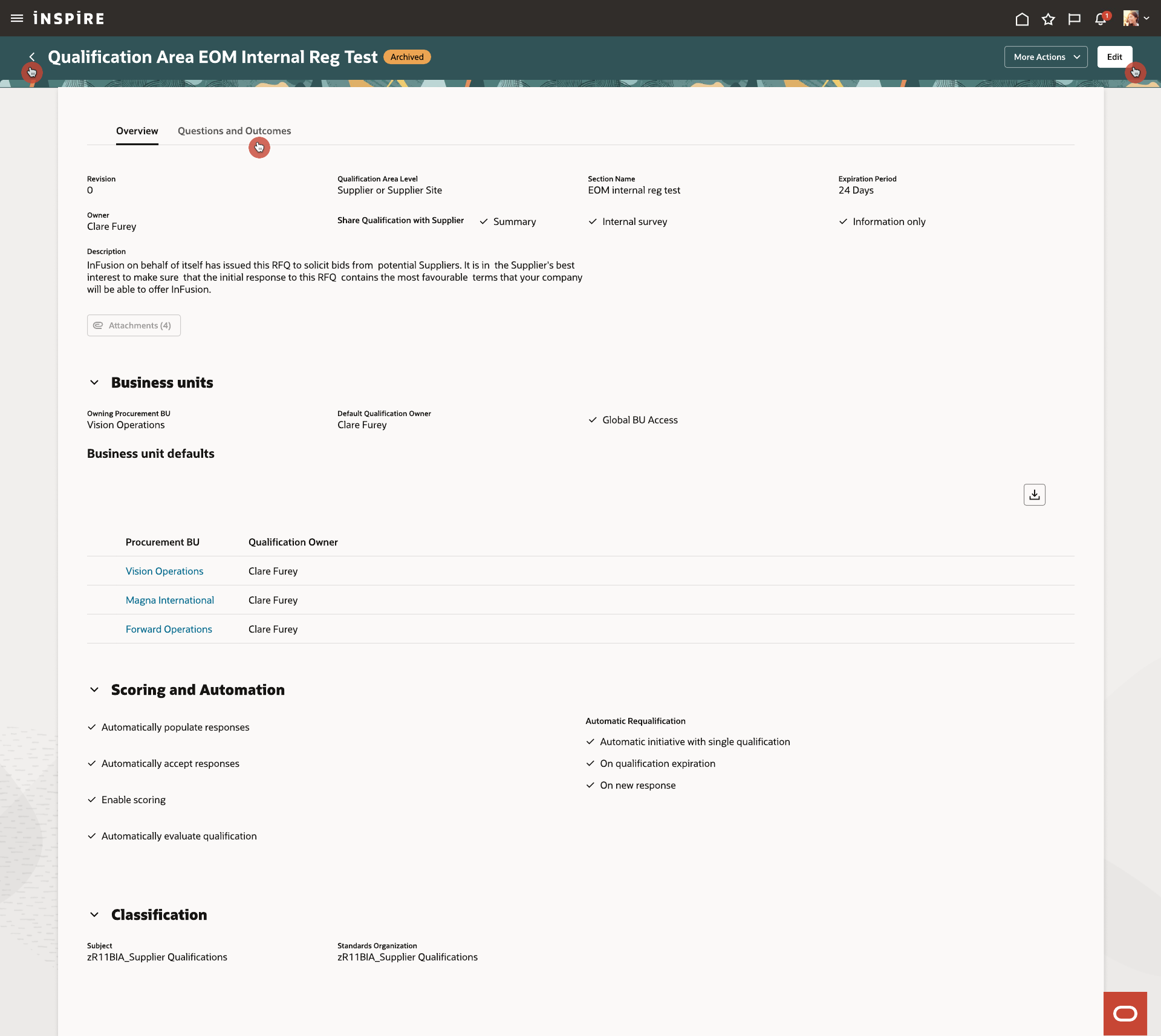
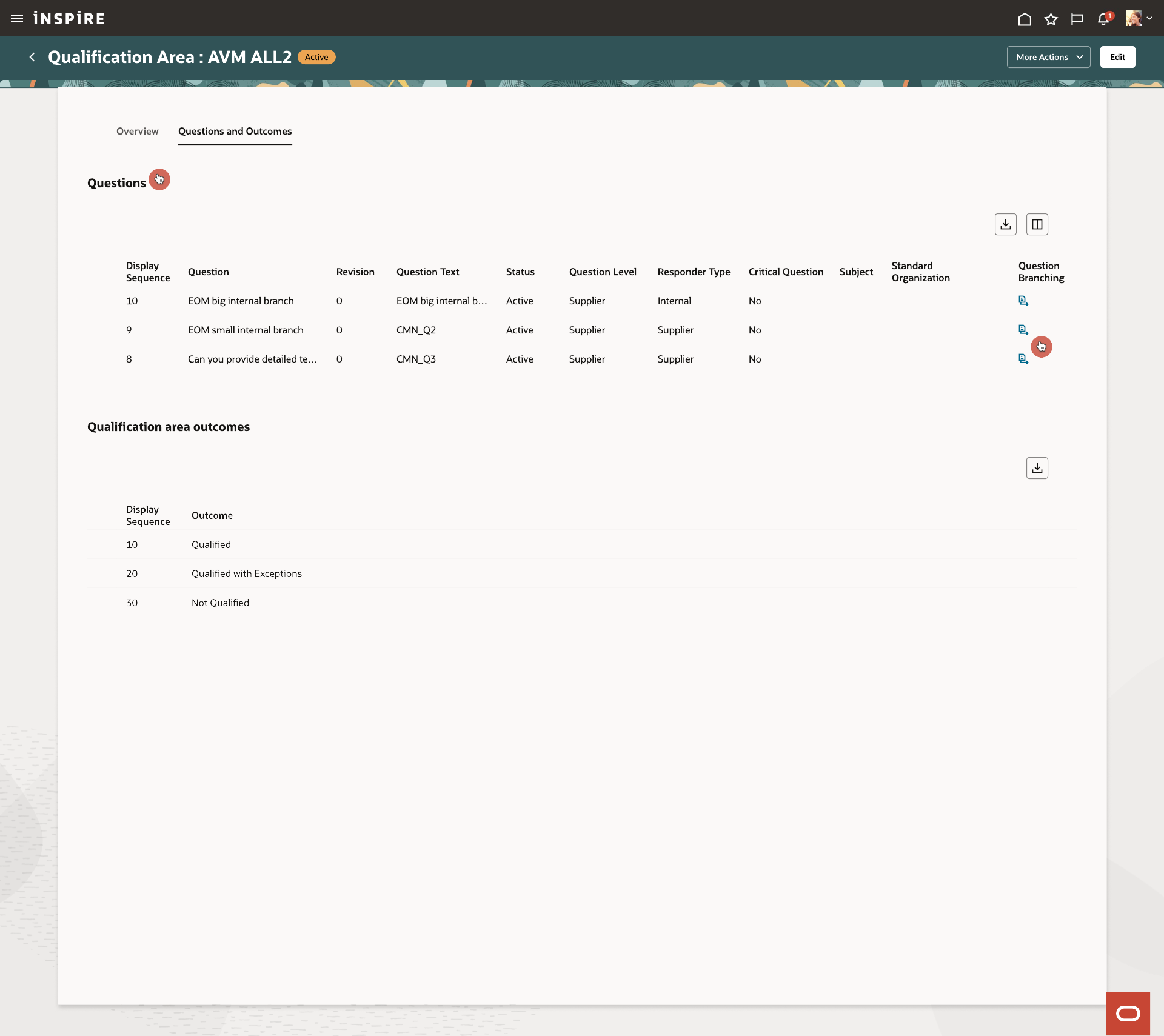
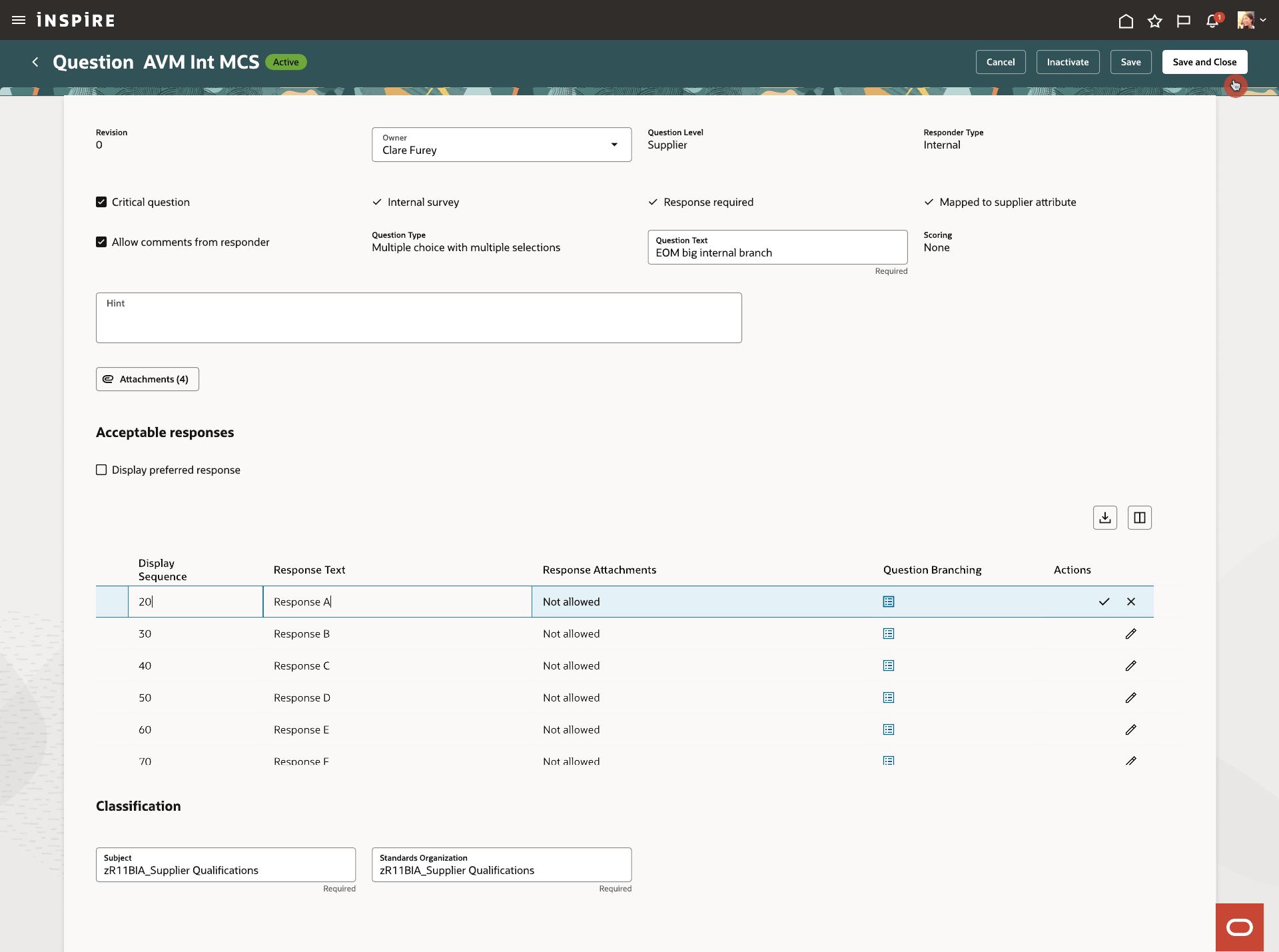
Questions and qualification areas form the reusable foundation of the workflow. These design samples show how managers inspect area details, review question content and maintain question settings.
04 / AI assistance · Shipped capabilities
I designed an AI-assisted question-creation approach that uses qualification-area and initiative context and draws on the existing question bank. Questions are populated in draft status so the manager can edit them before publication.
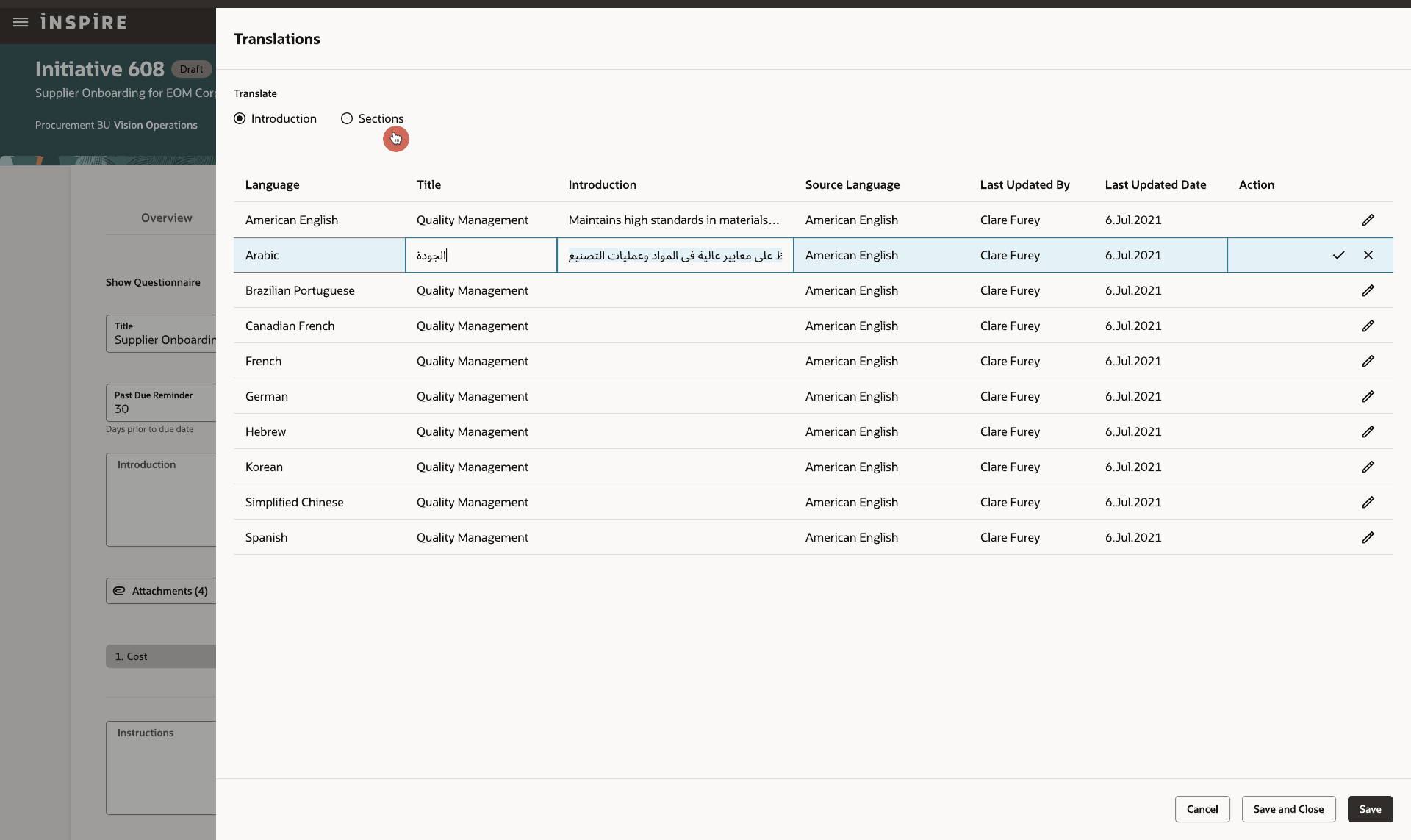
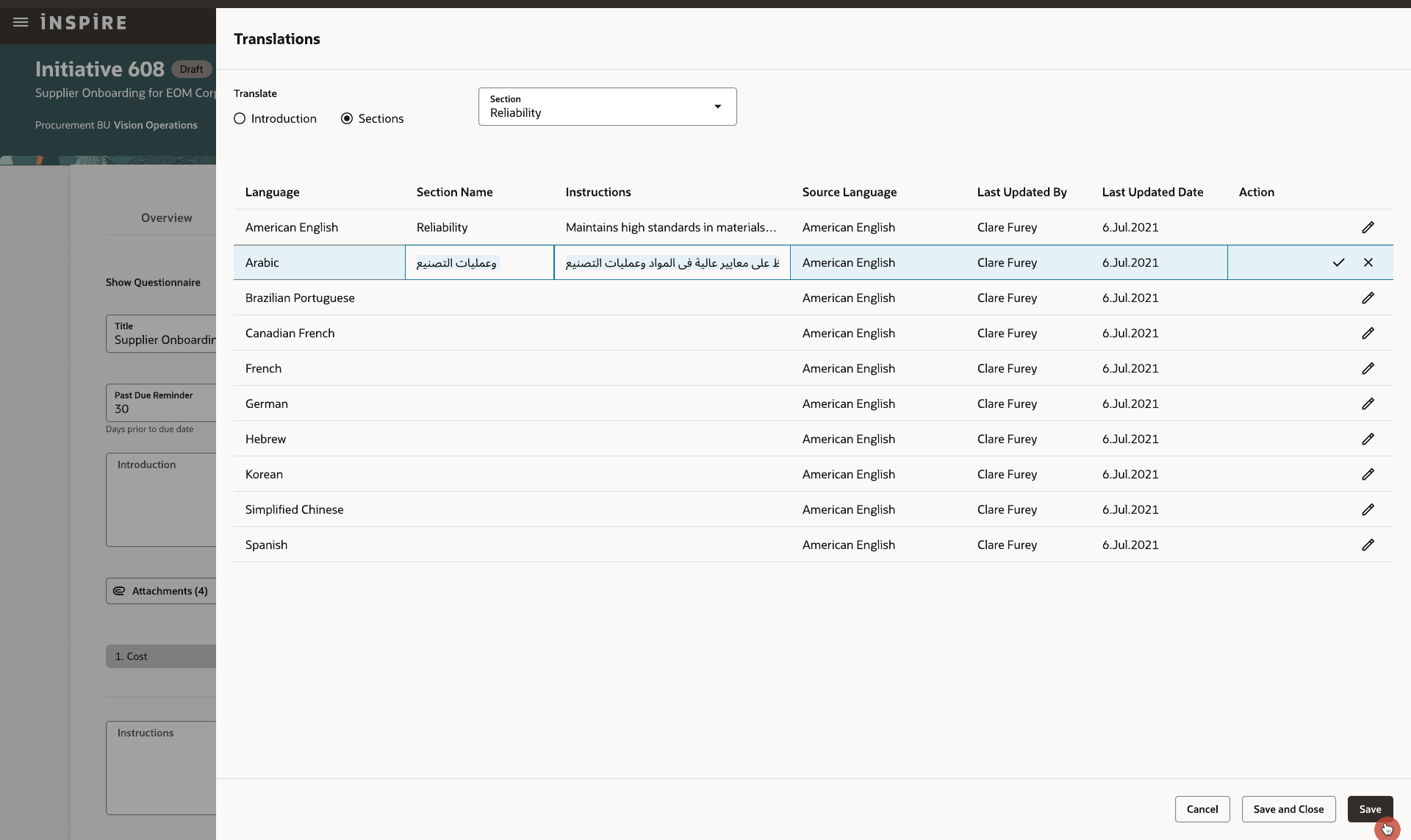
AI-assisted bulk translation also shipped. Category managers can review and edit translations before publishing, keeping the final content decision with the person responsible for the qualification.
05 / Keeping work moving
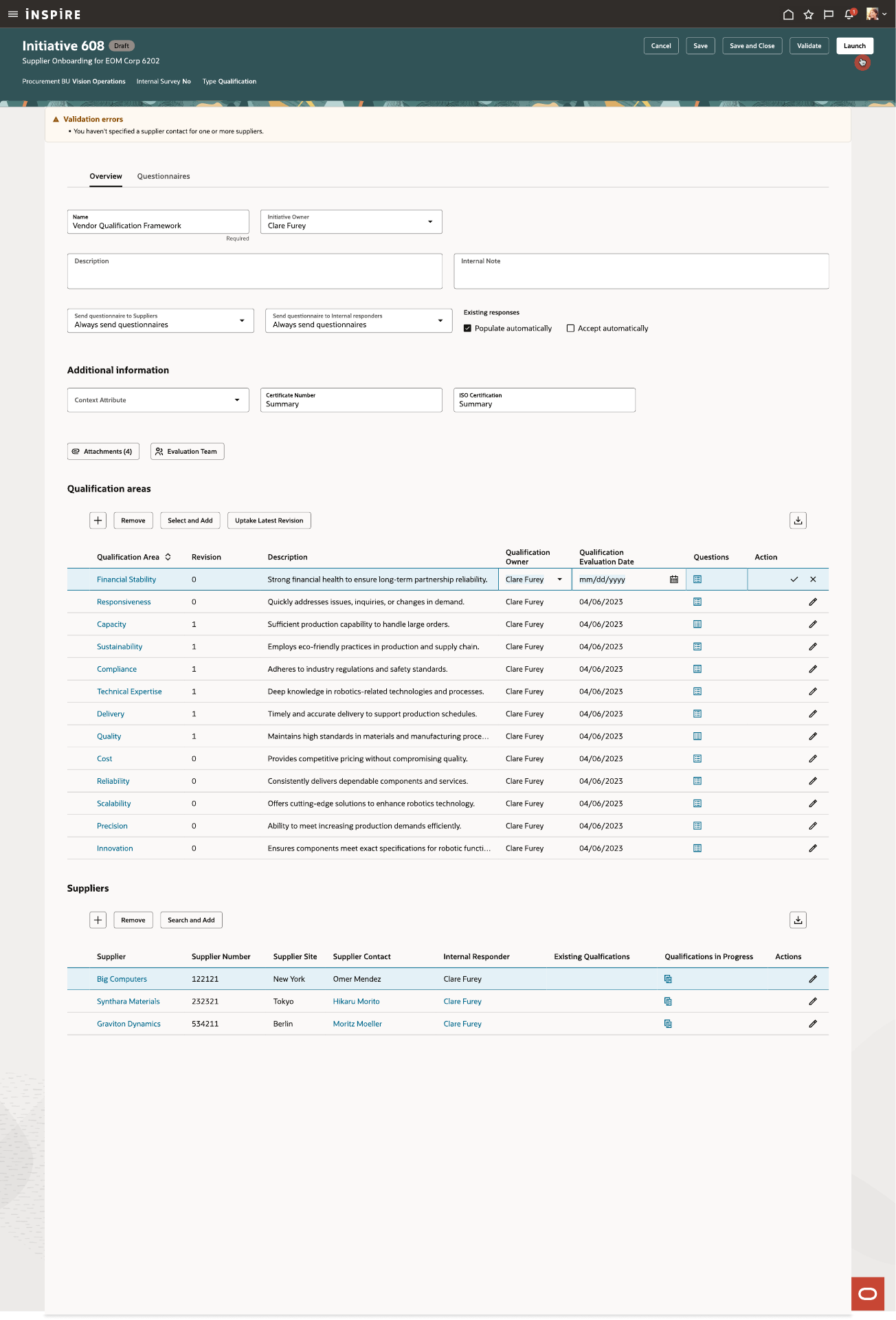
Supplier-specific reminders replaced the need to remind every supplier at once, allowing managers to direct follow-up where it was needed.
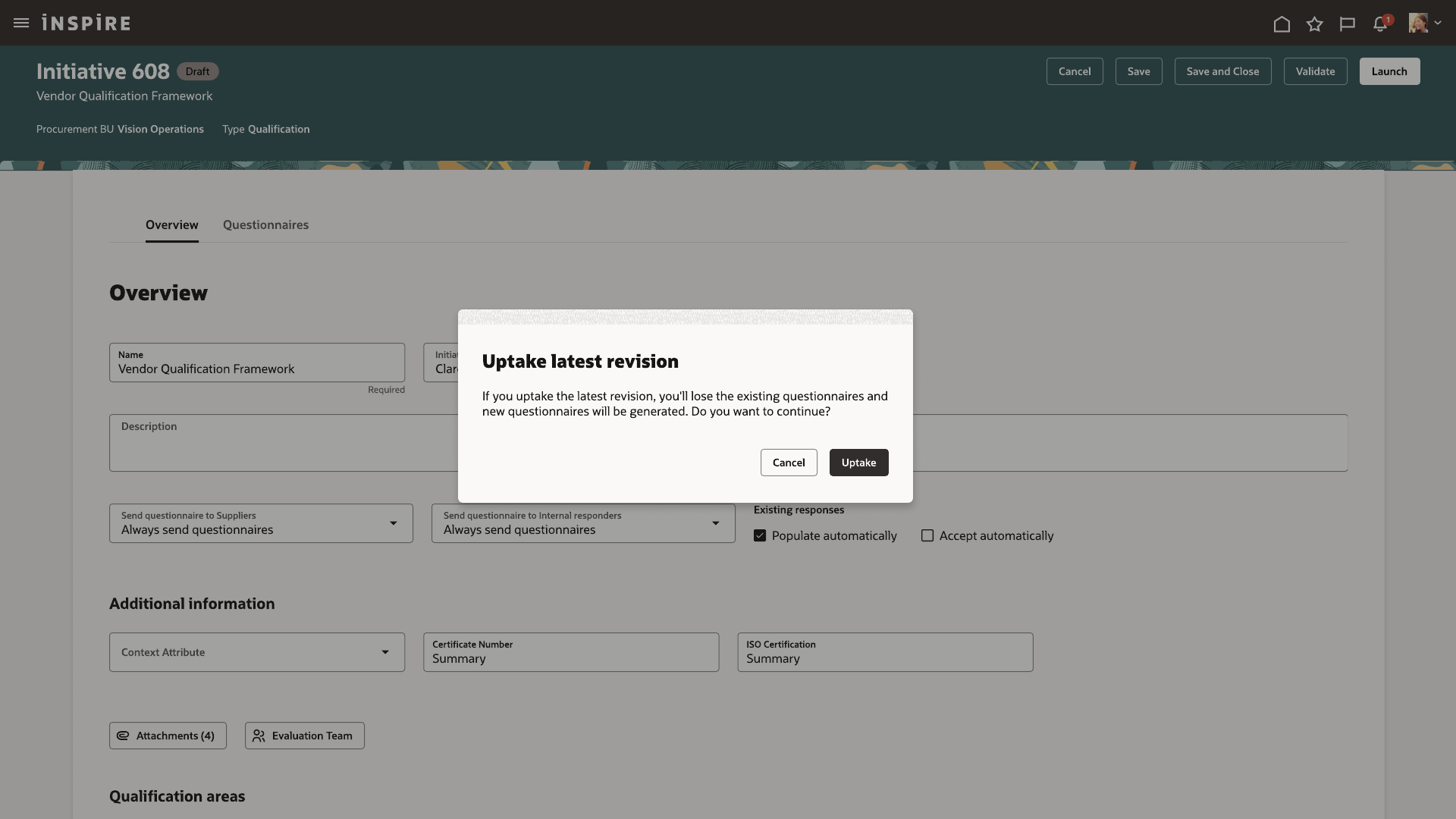
I advocated for a message banner when new revisions become available, replacing a manual check. Managers can choose whether to use “Uptake latest revision.”
The design sample warns that taking up a revision regenerates the questionnaires. Making that consequence explicit is an important part of keeping the manager in control.
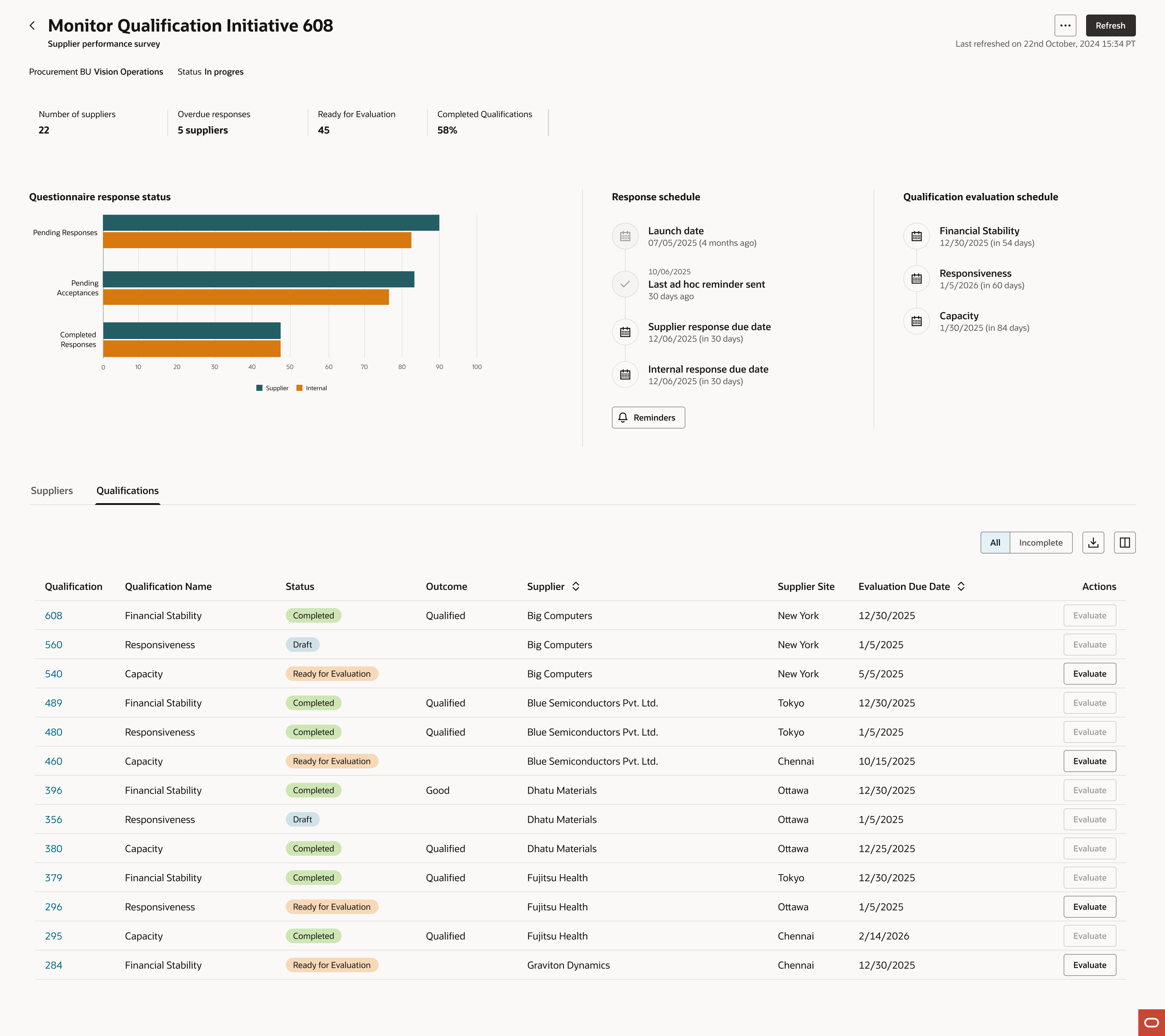
The monitoring designs bring response status and initiative progress together with supplier-level details.
06 / Leadership and delivery
As the sole designer leading SQM, I partnered with product managers Sujith and Anshu and the engineering team, including Varun. I organized recurring UX reviews to align stakeholders and secure leadership approval.
My process moved from existing-product exploration and PRD requirements to workflow sketches, then high-fidelity Redwood designs with realistic data. Reviews with product management, design leadership, engineering and product leadership shaped successive iterations.
Existing design-system components and engineering capacity shaped the scope. I used established patterns wherever possible, found alternatives when components were limited and deferred ideas that exceeded release capacity.
07 / Outcomes and next directions
The team shipped quarterly. Released capabilities included AI-assisted question creation and translation, supplier-specific reminders and revision visibility. Customer feedback came through Customer Connect, alongside tracking of question creation, responses and response timing.
Measured before-and-after results are not included here. The improvements described reflect shipped capabilities and design intent, rather than quantified impact claims.
I presented five to six automation and agentic concepts to leadership, with one or two selected for further consideration. One proposal explored monitoring supplier progress and adapting reminders to help qualification managers focus their attention.